
Choosing the right ophthalmologist is an important decision, especially when you need treatment for an eye condition or are considering eye surgery. Hyderabad has many eye hospitals and specialists, but finding the best ophthalmologist in Hyderabad is not simply about choosing the first name that appears in search results.
A good ophthalmologist should offer accurate diagnosis, appropriate treatment, clear communication, and proper follow-up care. The right choice can also depend on the specific eye condition you are dealing with, whether it is cataract, glaucoma, diabetic retinopathy, a retinal condition, dry eye, or a need for vision correction.
If you are searching for an ophthalmologist in Hyderabad, understanding what to look for can help you make a more informed decision.
Who Is an Ophthalmologist?
An ophthalmologist is a medical doctor who specialises in the diagnosis, treatment, and management of diseases and conditions affecting the eyes and vision.
Ophthalmologists can examine a wide range of eye problems and provide medical and surgical treatment when required. Depending on the patient’s condition, treatment may involve medication, observation, laser procedures, or surgery.
An ophthalmologist may diagnose and manage conditions such as:
- Cataract
- Glaucoma
- Diabetic retinopathy
- Retina disorders
- Dry eye
- Corneal conditions
- Refractive errors
- Children’s eye problems
- Eye infections and inflammation
- Eyelid and surrounding eye conditions
For someone looking for an eye doctor in Hyderabad, it is therefore useful to consider the doctor’s expertise and the range of eye care available rather than choosing a specialist based only on convenience or online ratings.
When Should You See an Ophthalmologist?
You do not always have to wait until your eyesight becomes noticeably worse before consulting an eye specialist.
You should consider an ophthalmology consultation if you experience:
- Blurred or reduced vision
- Difficulty seeing at night
- Persistent redness or irritation
- Eye pain
- Frequent headaches associated with vision
- Sudden flashes or new floaters
- Increased sensitivity to light
- Double vision
- Difficulty reading or focusing
- Changes in vision associated with diabetes
- Increasing dependence on glasses
- A noticeable change in your usual vision
Some eye conditions can develop gradually without obvious symptoms. Regular eye examinations can therefore be particularly important for people with diabetes, a family history of glaucoma or other eye diseases, increasing age, or previous eye problems.
What Should You Look for in the Best Ophthalmologist in Hyderabad?
There is no single factor that makes an ophthalmologist the best choice for every patient. Your choice should depend on your condition, treatment requirements, and the type of care you need.
1. Experience and Clinical Expertise
Experience can be valuable when diagnosing and treating different eye conditions. However, it is also important to consider whether the ophthalmologist regularly manages the particular problem you are concerned about.
For example, a patient looking for cataract surgery may want to understand the doctor’s experience with cataract evaluation and surgery. Someone with diabetes may need an ophthalmologist experienced in retinal examination and diabetic eye disease.
2. Accurate Diagnosis
A good consultation should begin with understanding your symptoms and medical history, followed by an appropriate eye examination.
Vision problems can sometimes originate from different parts of the eye. A detailed evaluation can help determine whether the problem involves the cornea, lens, retina, optic nerve, or another part of the eye.
3. Clear Explanation of Treatment Options
Eye conditions can be difficult to understand, particularly when surgery or long-term treatment is involved.
A good ophthalmologist should explain the diagnosis, available treatment options, expected outcomes, possible limitations, and follow-up requirements in language that the patient can understand.
4. Appropriate Use of Technology
Modern ophthalmology uses diagnostic equipment to examine different structures of the eye in greater detail.
Depending on the condition, an examination may include vision assessment, eye pressure measurement, retinal examination, corneal evaluation, or other diagnostic investigations.
Technology can support diagnosis, but clinical experience and judgement remain important when deciding what treatment is appropriate.
5. Patient-Centred Care
Patients often have many questions before deciding on treatment.
They may want to know:
- Do I need treatment immediately?
- Is surgery necessary?
- Are there other treatment options?
- What happens if I wait?
- How long is recovery?
- Will I need regular follow-up?
An ophthalmologist who takes time to address these concerns can make the treatment process easier to understand.
Common Eye Conditions and Treatments
The right ophthalmologist for you may depend on the specific eye condition you need help with. Some of the major areas of ophthalmic care include cataract, glaucoma, retina, diabetic eye disease, LASIK, dry eye, and pediatric eye care.
Cataract Surgery In Hyderabad
A cataract occurs when the natural lens of the eye becomes cloudy, gradually affecting vision. Patients may notice blurred vision, glare, difficulty seeing at night, or colours appearing less clear.
An ophthalmologist can examine the eye, assess the cataract, and determine whether monitoring or cataract surgery is appropriate.
When surgery is recommended, the ophthalmologist can also discuss the procedure, lens options, expected visual outcomes, and follow-up care.
Glaucoma Diagnosis and Treatment In Hyderabad
Glaucoma is a group of eye conditions that can damage the optic nerve and may lead to permanent vision loss if not detected and managed appropriately.
One of the challenges with glaucoma is that it may develop without noticeable symptoms in its early stages. Regular eye examinations can therefore be important, particularly for people who have risk factors.
Depending on the type and severity of glaucoma, treatment may include prescription eye drops, laser treatment, or surgery.
Retina Care and Diabetic Retinopathy In Hyderabad
The retina is a light-sensitive layer at the back of the eye that plays an important role in vision. Conditions affecting the retina can have a significant impact on eyesight and may require specialist evaluation.
Diabetes is one of the important systemic conditions that can affect the retina. Diabetic retinopathy occurs when diabetes damages the blood vessels in the retina.
Early diabetic eye disease may not cause obvious changes in vision, which is why people with diabetes should discuss appropriate eye screening with their doctor.
Depending on the condition, retinal treatment may involve monitoring, medication delivered into the eye, laser treatment, or surgery.
Anyone experiencing sudden flashes, a sudden increase in floaters, a curtain-like shadow, or sudden loss of vision should seek urgent ophthalmic evaluation.
LASIK and Refractive Eye Surgery
Many people who depend on glasses or contact lenses explore whether they may be suitable for LASIK eye surgery or another form of refractive vision correction.
LASIK is a laser-based procedure used to reshape the cornea and correct certain refractive errors. However, it is not suitable for everyone.
An ophthalmologist needs to assess factors such as the patient’s prescription, corneal health, eye health, age, and other individual factors before recommending LASIK.
A proper pre-operative evaluation is therefore an important part of deciding whether laser vision correction is appropriate.
Patients considering LASIK should discuss the potential benefits, limitations, risks, alternatives, and expected recovery with their ophthalmologist.
Dry Eye Treatment In Hyderabad
Dry eye is a common condition that can cause burning, irritation, a gritty sensation, watering, redness, or fluctuating vision.
It can have several causes, including prolonged screen use, environmental factors, certain medications, age-related changes, and problems affecting the tear film.
Treatment depends on the underlying cause and severity. An ophthalmologist can evaluate the eyes and recommend appropriate management rather than relying only on temporary relief.
Pediatric Ophthalmology and Children’s Eye Care
Children can experience vision problems that may not always be obvious to parents.
Conditions such as refractive errors, squint, lazy eye, and other childhood eye problems may require early assessment because vision development occurs during childhood.
Parents should consider an eye examination if a child frequently squints, sits very close to the television or books, complains of headaches, struggles with reading, or appears to have difficulty seeing clearly.
Corneal Treatment & Conditions In Hyderabad
The cornea is the clear front surface of the eye and plays an important role in focusing light.
Corneal problems can result from infections, injuries, inflammation, degenerative conditions, or other causes. Depending on the diagnosis, treatment may range from medication and monitoring to specialised procedures or surgery.
Patients with persistent eye pain, redness, light sensitivity, or reduced vision should have the condition properly evaluated rather than self-treating.
Oculoplastic Surgery and Eyelid Conditions
Ophthalmology also includes conditions affecting the eyelids and structures surrounding the eye.
Problems such as drooping eyelids, eyelid abnormalities, lumps, or certain changes around the eyes may require evaluation by an ophthalmologist with appropriate expertise.
Finding an Ophthalmologist Near You in Hyderabad
Hyderabad is a large city, and convenience can matter when choosing an eye hospital.
Eye care may involve more than one visit. A patient undergoing cataract surgery, for example, may need an initial consultation, pre-operative assessment, surgery, and follow-up appointments. Patients managing glaucoma, diabetic eye disease, or other chronic conditions may also require periodic examinations.
For this reason, choosing an eye hospital that is reasonably accessible from your home or workplace can make regular consultations and follow-ups easier.
People looking for an ophthalmologist near them in Hyderabad may search for eye specialists in areas such as Khajaguda, Manikonda, Nanakramguda, Narsingi, Kokapet, Gachibowli, Hitech City, Begumpet, Somajiguda, Punjagutta, Ameerpet, Banjara Hills, and Secunderabad.
Rather than travelling across the city for every appointment, a conveniently located eye hospital can make ongoing care more practical.
Ophthalmologist in Khajaguda
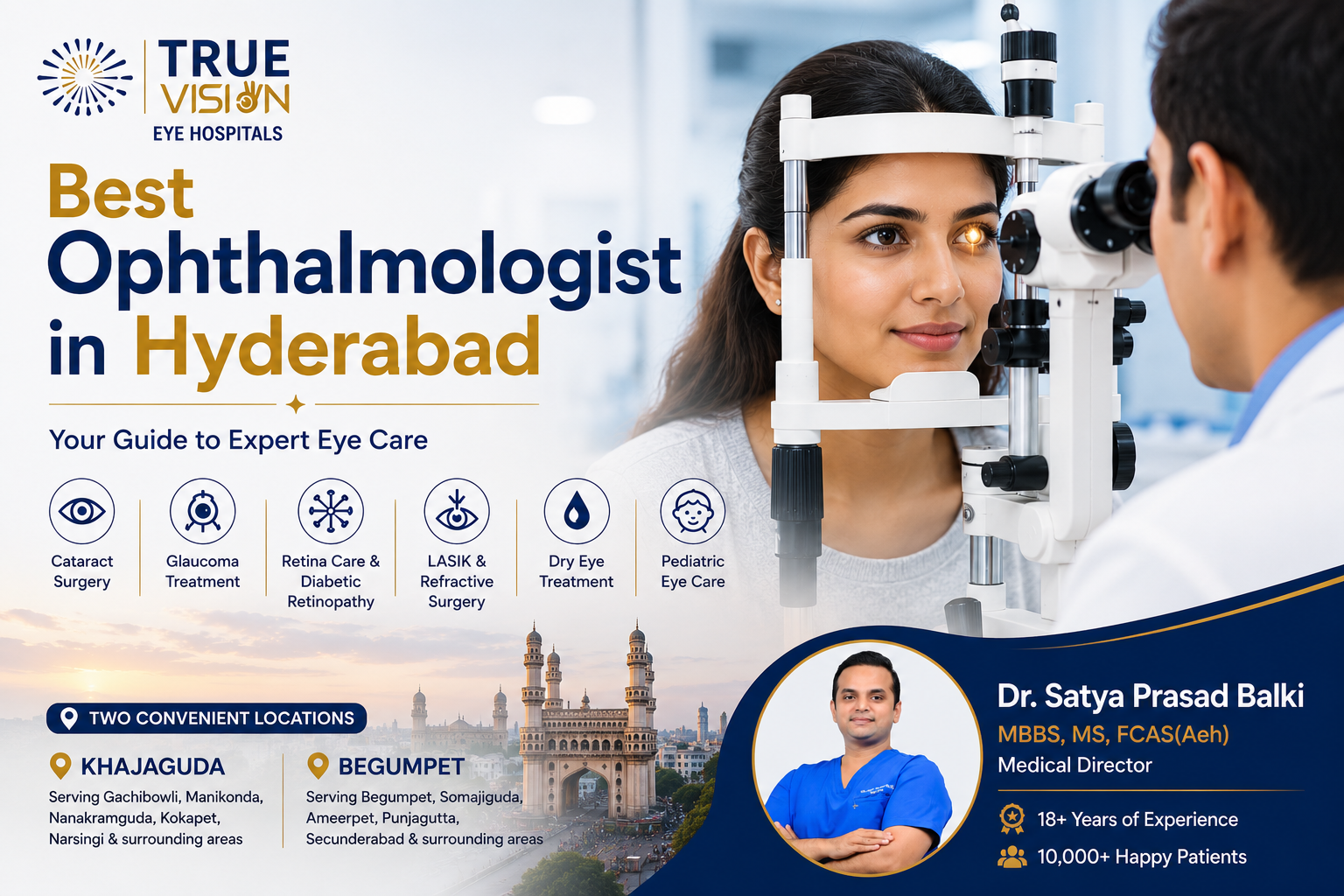
For patients living around Khajaguda and nearby areas of western Hyderabad, True Vision Eye Hospitals – Khajaguda provides comprehensive eye care.
The location can be convenient for patients from Manikonda, Nanakramguda, Narsingi, Kokapet, Gachibowli, and Hitech City.
Patients can visit the Khajaguda centre for evaluation and treatment of different eye conditions, depending on their individual requirements.
Internal link: Ophthalmologist in Khajaguda
Ophthalmologist in Begumpet
For patients living or working around central Hyderabad, True Vision Eye Hospitals – Begumpet provides another option for eye consultations and treatment.
The location can be convenient for patients from Begumpet and surrounding areas such as Somajiguda, Punjagutta, Ameerpet, Banjara Hills, and nearby parts of Secunderabad.
Having two locations gives patients greater flexibility when choosing an eye hospital based on where they live or work.
Internal link: Ophthalmologist in Begumpet
Why Location Matters When Choosing an Eye Hospital
Location may not be the first thing people consider when choosing an ophthalmologist, but it becomes increasingly important when treatment requires multiple visits.
Cataract patients may require pre-operative evaluation and post-operative follow-ups. People being monitored for glaucoma or diabetic eye disease may also need regular examinations.
Choosing a conveniently located eye hospital can make these appointments easier to attend and may help patients stay consistent with recommended follow-up care.
This can be particularly useful for families where more than one person needs regular eye examinations.
How to Prepare for Your First Ophthalmology Consultation
Before visiting an ophthalmologist, make a note of your symptoms and how long you have been experiencing them.
It can also be useful to carry:
- Previous eye examination reports
- Your current glasses or contact lens prescription
- Previous scan or investigation reports
- A list of medications you currently take
- Information about previous eye surgeries or treatments
- Relevant medical history
If you have diabetes, high blood pressure, or a family history of eye disease, mention this during the consultation.
Being prepared can help your ophthalmologist understand your history and plan the appropriate examination.
Frequently Asked Questions
What is the difference between an ophthalmologist and an eye doctor?
“Eye doctor” is a commonly used term for professionals involved in eye care. An ophthalmologist is a medical doctor who is specifically trained in diagnosing and treating eye diseases and performing eye surgery when required.
How do I choose the best ophthalmologist in Hyderabad?
Consider the ophthalmologist’s experience, expertise in your particular eye condition, approach to diagnosis, available treatment options, hospital facilities, communication, and the convenience of follow-up care.
How often should I visit an ophthalmologist?
The appropriate frequency depends on your age, eye health, medical history, and risk factors. People with conditions such as glaucoma or diabetic eye disease may require regular monitoring.
Should I see an ophthalmologist for cataract?
Yes. If you notice gradually blurred vision, glare, difficulty seeing at night, or other changes associated with cataract, an ophthalmologist can examine your eyes and determine whether cataract treatment or surgery is appropriate.
Can an ophthalmologist treat diabetic retinopathy?
Yes. Ophthalmologists can examine patients for diabetic eye changes and recommend appropriate monitoring or treatment based on the severity and type of retinal condition.
Is LASIK suitable for everyone?
No. LASIK suitability depends on factors including your prescription, corneal health, overall eye health, age, and other individual factors. A detailed eye examination is required before deciding whether LASIK is appropriate.
Can an ophthalmologist treat glaucoma?
Yes. Ophthalmologists diagnose and manage glaucoma and can recommend appropriate treatment and monitoring depending on the type and severity of the disease.
Where can I find an ophthalmologist in Hyderabad?
Hyderabad has ophthalmologists and eye hospitals across many areas. Patients can choose based on the specialist’s expertise, the treatment required, hospital facilities, and location.
True Vision Eye Hospitals has locations in Khajaguda and Begumpet, giving patients two options for accessing eye care in Hyderabad.
Choosing the Right Eye Care for You
Finding the best ophthalmologist in Hyderabad should ultimately be about finding the right combination of medical expertise, accurate diagnosis, appropriate treatment, clear communication, and convenient follow-up care.
Whether you need a routine eye examination or are looking for treatment for cataract, glaucoma, diabetic retinopathy, another retinal condition, LASIK, dry eye, pediatric eye problems, corneal conditions, or eyelid concerns, an ophthalmologist can help determine the appropriate next step.
For patients looking for an eye specialist in Hyderabad, considering the doctor’s experience in the relevant area, the quality of evaluation and treatment available, and the convenience of the hospital location can help make the decision easier.
With True Vision Eye Hospitals in Khajaguda and Begumpet, patients have two locations to choose from based on their individual needs and convenience.